


As a supplier of Heat Resistant PVC Elastic Pad Leather, I often encounter inquiries regarding its thermal conductivity. Understanding the thermal conductivity of this material is crucial for various applications, from industrial uses to consumer products. In this blog, I'll delve into what thermal conductivity means, how it applies to Heat Resistant PVC Elastic Pad Leather, and why it matters in different contexts.
What is Thermal Conductivity?
Thermal conductivity is a fundamental property of materials that describes their ability to conduct heat. It is defined as the quantity of heat (in watts) transmitted through a unit thickness (in meters) of a material in a direction normal to a surface of unit area (in square meters), due to a unit temperature gradient (in kelvins per meter) under steady-state conditions. In simpler terms, it measures how easily heat can pass through a material.
Materials with high thermal conductivity, like metals such as copper and aluminum, transfer heat quickly. This is why they are commonly used in applications where efficient heat transfer is required, such as heat sinks in electronics. On the other hand, materials with low thermal conductivity, like insulators such as fiberglass and foam, impede the flow of heat. They are used to prevent heat loss or gain, for example, in building insulation.
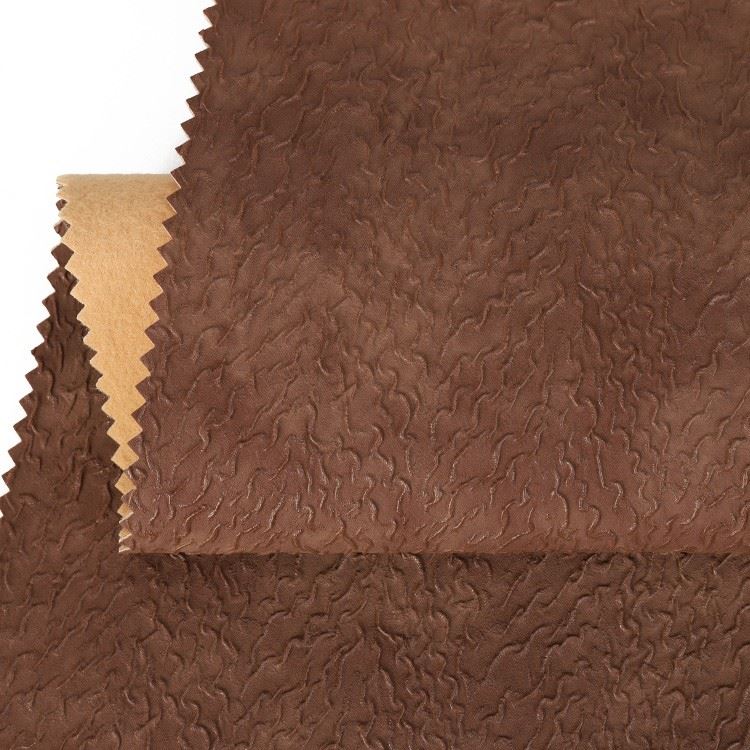

Thermal Conductivity of Heat Resistant PVC Elastic Pad Leather
Heat Resistant PVC Elastic Pad Leather is engineered to have specific thermal properties. Its thermal conductivity is relatively low compared to metals but can vary depending on several factors.
Composition and Structure
The base material of PVC (polyvinyl chloride) itself has a certain level of thermal insulation. The addition of heat-resistant additives and the unique elastic pad structure further modify its thermal conductivity. These additives and the internal structure of the pad can create barriers to heat transfer, reducing the overall thermal conductivity.
Thickness
The thickness of the Heat Resistant PVC Elastic Pad Leather also plays a significant role. Generally, thicker pads have lower effective thermal conductivity because heat has to travel through a greater distance, encountering more resistance along the way.
Density
The density of the material affects how closely packed the molecules are. A higher density can sometimes lead to slightly higher thermal conductivity as there are more pathways for heat to transfer through the material. However, in the case of Heat Resistant PVC Elastic Pad Leather, the design often balances density to maintain both flexibility and heat resistance.
Typically, the thermal conductivity of Heat Resistant PVC Elastic Pad Leather ranges from 0.1 to 0.3 W/(m·K). This range makes it a suitable material for applications where moderate heat insulation is required.
Applications and the Importance of Thermal Conductivity
The thermal conductivity of Heat Resistant PVC Elastic Pad Leather makes it a versatile material for various applications.
Industrial Applications
In industrial settings, this material can be used as gaskets or seals in machinery. Its heat-resistant properties and low thermal conductivity help prevent heat transfer between different components, reducing the risk of overheating and improving the overall efficiency and lifespan of the equipment. For example, in engines or heating systems, Heat Resistant PVC Elastic Pad Leather can act as a barrier to contain heat within specific areas.
Consumer Products
In consumer products, it can be found in items such as hot pads for kitchen use. The low thermal conductivity ensures that the heat from hot pots and pans is not easily transferred to the user's hands, providing a safe and comfortable handling experience. It can also be used in the manufacturing of bags and mats. For instance, Artificial Trendy PVC Leather for Bag and Exquisite Stretchable Strong PVC Bag Leather can incorporate Heat Resistant PVC Elastic Pad Leather to provide some level of insulation for the contents inside the bag, protecting them from external heat sources. Similarly, Modern Luxury Top-quality Stylish Mat Leather can use this material to offer heat resistance in various environments.
Quality Control and Testing
As a supplier, we take great care in ensuring the quality and consistency of the thermal conductivity of our Heat Resistant PVC Elastic Pad Leather. We conduct regular testing using advanced thermal conductivity measurement equipment. These tests involve creating controlled temperature gradients across samples of the material and measuring the heat flow. By comparing the results with industry standards and our own quality benchmarks, we can guarantee that our products meet the expected thermal performance.
Conclusion
The thermal conductivity of Heat Resistant PVC Elastic Pad Leather is a key property that determines its suitability for a wide range of applications. Its relatively low thermal conductivity, combined with its heat resistance and elasticity, makes it a valuable material in both industrial and consumer sectors.
If you are interested in purchasing Heat Resistant PVC Elastic Pad Leather for your specific needs, whether it's for industrial machinery, consumer products, or any other application, I encourage you to reach out for a detailed discussion. We can provide samples, technical specifications, and pricing information to help you make an informed decision. Let's start a conversation about how our Heat Resistant PVC Elastic Pad Leather can meet your requirements and enhance your products or operations.
References
- Incropera, F. P., & DeWitt, D. P. (2002). Fundamentals of Heat and Mass Transfer. Wiley.
- Holman, J. P. (2010). Heat Transfer. McGraw-Hill.


